
Caps have always been more than a practical accessory. They protect us from the sun, complete an outfit, represent a team, and give businesses a wearable way to promote their identity. Today, however, customers want more creative freedom than simply placing a standard embroidered logo directly onto the front of a cap.
That is where iron-on patch caps come in.
An iron-on patch cap combines the practicality of customised headwear with the visual impact of a separately created patch. Instead of stitching every detail directly into the cap fabric, the design is produced as a patch and attached using a heat-activated backing. Depending on the design and material, patches can offer embroidery, woven details, printed artwork, textured surfaces, and other distinctive finishes.
For businesses, clothing labels, sports teams, clubs, events, and individuals, this opens up exciting possibilities. A cap can become a miniature billboard for a brand, a piece of merchandise, a team accessory, or simply a unique fashion statement.
At Custom Embroidered Caps UK, we understand that no two projects are exactly alike. Some customers need a clean embroidered logo for staff uniforms. Others want a detailed patch that captures artwork too complex for traditional cap embroidery. Some are launching a clothing brand and want headwear that feels premium and different from standard promotional merchandise.
Iron-on patch caps provide a flexible solution for all of these needs.
In this guide, we explore what iron-on patch caps are, why they are becoming increasingly popular, which patch styles work best, how to design them, and how they can be used to create memorable custom headwear.
What Are Iron-On Patch Caps?
An iron-on patch cap is a cap customised with a patch that features a heat-activated adhesive backing. The patch is positioned on the chosen area of the cap and attached using controlled heat and pressure.
The patch itself can be made in several ways. For example, it may be:
- An embroidered patch
- A woven patch
- A printed patch
- A leather or leather-look patch
- A PVC or rubber-style patch
- A fabric badge with detailed artwork
The most suitable option depends on the appearance you want to achieve.
The important difference between direct embroidery and a patch is that the design is created separately before being applied to the cap. This can give the finished headwear a layered, distinctive appearance.
Heat-seal patch systems generally rely on a heat-activated adhesive backing that bonds when the correct combination of heat and pressure is applied. The exact application process should always depend on the patch material, adhesive, and cap fabric being used.
This method gives brands and individuals another way to customize caps beyond traditional embroidery.
Why Are Iron-On Patch Caps So Popular?
The growing popularity of iron-on patch caps is easy to understand. They offer a balance between creativity, branding, and practicality.
A More Distinctive Look
A patch creates a separate visual layer on the cap. This can make a logo or design appear more like a badge or emblem rather than artwork stitched directly into the fabric.
For fashion brands, this detail can help create a stronger product identity.
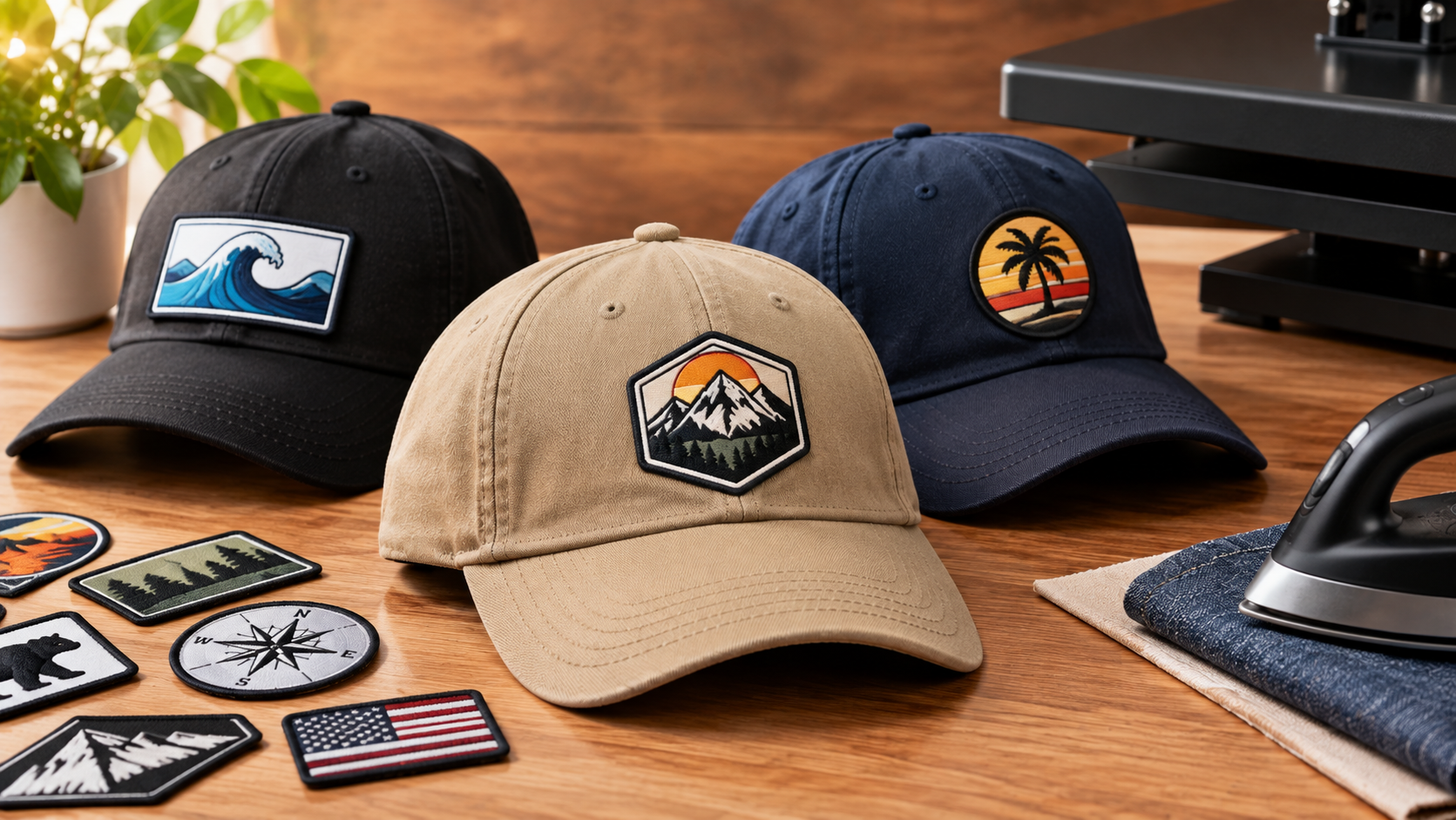
A circular patch can give a cap a vintage outdoor appearance. A rectangular woven badge can create a clean, modern style. A leather-look patch can add a premium feel. An embroidered patch can provide texture and depth.
The same cap silhouette can therefore take on completely different personalities depending on the patch selected.
Greater Design Flexibility
Traditional embroidery is excellent for many logos and designs, but some artwork may contain tiny lettering, intricate lines, gradients, or detailed illustrations that require a different decoration method.
Patches give designers more flexibility in choosing how the artwork is reproduced.
For example:
- Embroidery can create texture.
- Woven patches can reproduce finer details.
- Printed patches can work well for highly detailed or colourful artwork.
- PVC patches can create a bold, dimensional appearance.
- Leather-style patches can create a premium, minimalist finish.
Modern custom headwear suppliers increasingly offer patch applications alongside direct embroidery because different branding styles require different decoration techniques.
Easier Brand Recognition
A well-designed patch can act as a recognisable brand signature.
Think about how many successful clothing and outdoor brands use small badges, labels, or patches as part of their identity. The decoration itself becomes part of the product’s recognisable style.
When customers repeatedly see the same shape, border, colours, and logo treatment, the patch can become closely associated with the brand.
Suitable for Many Cap Styles
Iron-on patches are not limited to one particular type of hat. They can be incorporated into many popular styles, including:
- Baseball caps
- Trucker caps
- Snapbacks
- Dad caps
- 5-panel caps
- Flat-brim caps
- Sports caps
- Promotional caps
- Workwear headwear
The cap style should influence the shape and placement of the patch.
For example, a structured snapback can support a bold rectangular front patch, while a softer dad cap may look better with a smaller circular or oval design.
Iron-On Patch Caps vs Direct Embroidery
One of the most common questions customers ask is whether they should choose a patch or direct embroidery.
The answer depends on the design and the desired appearance.
Direct Embroidery
With direct embroidery, the design is stitched directly onto the cap.
This option is ideal for:
- Simple logos
- Company names
- Bold lettering
- Sports team branding
- Uniforms
- Traditional promotional caps
Direct embroidery has a classic and professional appearance. Flat embroidery provides a clean finish, while 3D puff embroidery can add raised depth to selected designs.
Iron-On Patches
Iron-on patches are created separately and then applied to the cap.
They are particularly useful when you want:
- A badge-style appearance
- Detailed artwork
- A different texture from the cap fabric
- A layered design
- A distinctive border or shape
- A vintage or fashion-inspired aesthetic
Rather than asking which option is universally better, it is more useful to ask which option best represents your design.
A simple company logo may look perfect with direct embroidery.
A detailed illustration with tiny elements may benefit from a woven or printed patch.
A fashion brand may prefer a leather-style patch because it creates the premium appearance they want.
At Custom Embroidered Caps UK, the best approach is to consider the design, cap style, intended use, and overall brand personality before choosing the decoration method.
Types of Patches for Custom Caps
Not all patches look or perform in the same way. Choosing the right material is an important part of designing your iron-on patch caps.
Embroidered Patches
Embroidered patches are among the most recognisable styles.
They use stitched thread to create a textured design, usually on a fabric base. This makes them ideal for logos, badges, crests, symbols, and bold lettering.
They work particularly well for:
- Sports teams
- Clubs
- Motorcycle groups
- Outdoor brands
- Workwear
- Military-inspired fashion
- Vintage-style headwear
The raised texture of embroidery gives the design physical depth.
For caps, embroidered patches can create a strong badge-like appearance that feels classic and durable.
Woven Patches
Woven patches are useful when a design contains smaller details or fine text.
Because the artwork is created through tightly woven threads rather than traditional embroidery stitches, it can produce a flatter and more precise finish.
Woven patches are a strong option for:
- Detailed logos
- Small lettering
- Intricate artwork
- Fashion labels
- Minimalist branding
If your design loses clarity when converted into standard embroidery, a woven patch may be worth considering.
Printed Patches
Printed patches can reproduce artwork that includes complex colours, gradients, illustrations, or photographic-style details.
This makes them useful for creative campaigns and designs that are not naturally suited to thread.
They can be an excellent choice for:
- Event merchandise
- Creative brands
- Artist collaborations
- Detailed illustrations
- Multi-colour graphics
PVC Patches
PVC patches create a bold, modern, dimensional appearance.
They are commonly associated with outdoor, tactical, sports, and lifestyle designs.
PVC can be particularly effective for logos with bold shapes and clean lines. The result can look highly distinctive on darker caps, trucker hats, and structured headwear.
Leather and Leather-Look Patches
Leather patches are popular because they create an instantly premium appearance.
A logo can be engraved, embossed, or otherwise incorporated into the patch surface, depending on the material and production method.
This style works especially well for:
- Premium clothing brands
- Outdoor brands
- Golf caps
- Trucker caps
- Lifestyle merchandise
- Corporate gifts
Leather patch caps have become a popular choice for brands that want a cleaner, more understated appearance than colourful embroidery.
Choosing the Right Cap for Your Patch
The patch is only one part of the finished product. The cap itself plays an equally important role.
Baseball Caps
Baseball caps are one of the most versatile options for iron-on patches.
Their front panels can accommodate a wide range of patch shapes and sizes, making them suitable for businesses, sports teams, and promotional merchandise.
A rectangular, circular, or shield-shaped patch can work well depending on the design.
Trucker Caps
Trucker caps are especially popular with outdoor and lifestyle brands.
The combination of a structured front panel and mesh back creates a casual but distinctive appearance.
Leather-style patches, embroidered patches, and bold PVC designs can all work well on this cap style.
Snapbacks
Snapbacks caps offer a structured, modern silhouette.
They are particularly suitable for bold branding and larger front patches.
Streetwear brands often use custom patches to create a strong centrepiece on the front panel.
Dad Caps
Dad caps have a softer, more relaxed appearance.
Smaller patches often work better because they complement the casual shape of the cap.
A subtle woven badge or embroidered logo patch can create a stylish result without making the design feel too heavy.
Five-Panel Caps
Five-panel caps are popular in fashion, outdoor, and promotional markets.
The front area can provide a clean canvas for a carefully designed patch.
Because the cap has a distinctive construction, it is important to consider the panel seams when choosing patch placement and size.
How to Design an Effective Iron-On Patch Cap
A successful patch cap starts with a successful design.
Here are some important principles to consider.
Keep the Main Message Clear
The patch should communicate something quickly.
If it represents a brand, the logo should be recognisable at the size it will appear on the cap.
Avoid adding so much information that the design becomes difficult to understand from a normal viewing distance.
A cap is not a billboard. Small, clear, well-balanced artwork usually performs better than an overcrowded design.
Choose the Right Patch Shape
The shape of the patch can completely change the personality of the cap.
Popular choices include:
- Circle
- Rectangle
- Square
- Oval
- Shield
- Custom die-cut shape
A circular patch can feel traditional and outdoorsy.
A rectangular patch can feel modern and clean.
A custom shape can make the branding more distinctive.
The best option is usually one that supports the design rather than competing with it.
Think About Colour Contrast
The patch should stand out against the cap fabric.
A dark patch on a dark cap may create a subtle premium appearance, but it may also reduce visibility.
A high-contrast patch will generally attract more attention.
Before final production, it is helpful to visualise the patch on the actual cap colour.
For example:
- Black cap + white or tan patch
- Navy cap + light grey patch
- Khaki cap + dark embroidered patch
- White cap + colourful branded patch
The goal should be intentional contrast rather than simply choosing colours independently.
Consider the Size Carefully
An oversized patch may dominate the entire cap.
A patch that is too small may lose its visual impact.
The ideal size depends on:
- Cap style
- Panel dimensions
- Logo complexity
- Intended viewing distance
- Brand style
A simple logo can often work effectively at a smaller size. A detailed design may need more space to remain readable.
Simplify Small Details
This is one of the most important design rules.
If your original artwork contains tiny text, extremely thin lines, or numerous small elements, some details may need to be simplified for patch production.
A good patch design is not always an exact copy of a digital logo. It is an adaptation of that logo for a physical, textured surface.
Our design process at Custom Embroidered Caps UK can focus on making sure the artwork works effectively at the intended cap size.
Where Can Iron-On Patches Be Placed on a Cap?
The front of the cap is the most popular location, but it is not the only option.
Front Centre
This is the classic placement.
It gives maximum visibility and works well for company logos, brand names, symbols, and badges.
Side Panel
A side patch can provide a subtle secondary branding element.
This is useful when the front of the cap already features embroidery or another decoration method.
Back of the Cap
A smaller patch can be added to the rear area, depending on the cap construction.
This can include:
- A small logo
- A brand symbol
- Initials
- A short slogan
Multiple Placements
Some brands choose a combination of decoration methods.
For example:
- Large front patch
- Small side embroidery
- Back logo
This can create a premium, fully branded appearance.
However, balance is important. Too many decorations can make the cap look cluttered.
Why Businesses Should Consider Iron-On Patch Caps
Custom caps are a useful promotional product because they are practical, reusable, and visible.
Unlike disposable promotional materials, a well-designed cap can be worn repeatedly.
When a business combines this with a distinctive patch, the result can become a memorable piece of branded merchandise.
Staff Uniforms
Companies can use custom patch caps to create a consistent staff appearance.
This can be particularly useful for:
- Construction teams
- Hospitality businesses
- Retail teams
- Outdoor companies
- Event staff
- Delivery teams
- Trade businesses
A clear patch logo can help employees look unified while also increasing brand visibility.
Promotional Events
Events create opportunities for branded merchandise.
Custom iron-on patch caps can be produced for:
- Product launches
- Festivals
- Corporate events
- Charity events
- University societies
- Trade shows
- Community events
A cap that looks stylish is more likely to be worn after the event, giving the brand longer-lasting exposure.
Clothing Brands
For fashion and streetwear brands, the cap itself can be a product rather than just a promotional item.
A custom patch can help establish a signature style.
Instead of simply placing a logo directly on every cap, brands can experiment with:
- Seasonal patch designs
- Limited-edition collections
- Different patch materials
- Vintage-inspired badges
- Collaborative artwork
This makes it easier to create collections with distinct visual identities.
Iron-On Patch Caps for Sports Teams and Clubs
Sports teams and clubs need headwear that builds a sense of identity.
A custom patch can feature:
- Team name
- Club crest
- Mascot
- Competition details
- Anniversary year
- Player initials
Patch caps can be used for players, coaching staff, supporters, and fundraising merchandise.
They are also suitable for clubs that want a design that feels different from standard embroidered teamwear.
A detailed crest, for example, may be easier to reproduce as a patch than as direct embroidery on some cap styles.
Iron-On Patch Caps for Events
Event organisers often need merchandise that is practical, visually appealing, and easy to associate with a particular occasion.
Patch caps can work well for:
- Music events
- Sports tournaments
- Charity runs
- Corporate gatherings
- Family reunions
- School events
- Brand activations
Adding the event name, date, logo, or artwork to a patch can turn an ordinary cap into a keepsake.
People are more likely to keep and wear merchandise when it feels like a genuine product rather than a simple giveaway.
Creating Premium Merchandise with Patch Caps
The difference between promotional merchandise and desirable merchandise often comes down to design.
A basic cap with a large company logo may work perfectly for some campaigns. However, if you want customers to buy the product or wear it regularly, a more fashion-focused approach may be necessary.
Consider:
Limited Colours
A restricted colour palette can create a more premium appearance.
High-Quality Cap Materials
The cap should feel as good as it looks.
Thoughtful Patch Placement
Small changes in placement can create a more modern result.
Consistent Branding
The patch colours, shape, typography, and cap style should all work together.
Attention to Small Details
Side embroidery, inside labels, contrast stitching, and subtle back branding can make merchandise feel more intentional.
How Are Iron-On Patches Applied to Caps?
The exact method can vary according to the cap material and the type of heat-seal backing used.
Generally, the process involves positioning the patch, applying controlled heat and pressure, and allowing the adhesive to cool and bond. Heat-activated patch backings are designed to soften or activate under the correct application conditions, but the precise temperature and dwell time should follow the manufacturer’s instructions for the specific patch and fabric.
Because caps have curved surfaces and may contain seams, structured panels, foam, or heat-sensitive materials, professional application is often preferable for production orders.
Using too much heat can damage some fabrics or cap components, while insufficient heat or pressure may result in a weak bond.
For this reason, every project should consider the compatibility between:
- Patch backing
- Cap material
- Cap construction
- Application equipment
- Patch location
How Durable Are Iron-On Patch Caps?
Durability depends on several factors, including the patch material, adhesive quality, cap fabric, application method, and how the finished cap is used and cared for.
A properly selected and correctly applied patch can provide a practical solution for regular wear. However, customers should always follow the specific care guidance supplied for their patch and cap combination.
Factors that can influence durability include:
- Excessive washing
- High heat
- Harsh detergents
- Repeated friction
- Incorrect initial application
- Exposure to conditions beyond the intended use
If a cap is intended for demanding workwear or heavy-duty outdoor use, alternative attachment methods or additional stitching may be considered depending on the project.
How to Care for Iron-On Patch Caps
Good care can help preserve the appearance of both the patch and the cap.
Some general recommendations include:
Avoid Excessive Heat
High heat can affect adhesives, cap materials, and decorative elements.
Follow the Manufacturer’s Care Instructions
Different cap fabrics and patch materials may require different care methods.
Avoid Aggressive Scrubbing
Rough cleaning around the patch edges may cause unnecessary wear.
Clean the Cap Carefully
Spot cleaning is often a practical option for many types of headwear, but customers should always follow the specific care instructions provided for their product.
Store Caps Properly
Avoid crushing structured caps beneath heavy objects, as this can affect their shape and appearance.
Common Mistakes to Avoid When Designing Patch Caps
Even a great logo can produce disappointing results if the design process is rushed.
Choosing Too Many Colours Without a Purpose
More colours do not automatically make a patch better.
Use colour to support the design.
Making the Text Too Small
Tiny lettering can become difficult to reproduce or read.
Simplify wherever possible.
Ignoring the Cap Colour
Always consider how the patch will look against the actual cap fabric.
Choosing a Patch That Is Too Large
The patch should complement the cap rather than overwhelm it.
Forgetting About Cap Seams
A patch placement that looks perfect on a flat digital mock-up may not work as well on the physical construction of a cap.
Not Reviewing a Mock-Up
A visual proof can help identify problems with:
- Scale
- Placement
- Colour contrast
- Logo clarity
- Overall balance
Taking time to review the design before production can help avoid costly mistakes.
Why Choose Custom Embroidered Caps UK?
At Custom Embroidered Caps UK, we believe customised headwear should feel personal to the brand, business, event, or individual behind it.
There is no single cap style or decoration method that works for everyone.
Some customers want classic embroidered caps. Others want bold 3D puff designs. Some need detailed patches that create a completely different look.
Our goal is to help customers explore the customisation option that best suits their design.
Whether you are creating:
- Branded business caps
- Staff uniforms
- Sports team headwear
- Promotional merchandise
- Fashion collections
- Event caps
- Club merchandise
- Personalised gifts
the design should be created with the final product in mind.
A strong cap begins with a strong concept.
The right combination of cap style, fabric, colour, patch material, shape, size, and placement can turn a simple accessory into something people genuinely want to wear.
Custom cap providers increasingly use a variety of decoration methods, including embroidered, woven, PVC, leather, and other patch styles, reflecting the growing demand for more flexible and distinctive headwear customisation.
The Future of Custom Patch Headwear
Customisation continues to play an important role in fashion, merchandising, and business branding.
Customers no longer want identical products with a logo added as an afterthought. They want merchandise that reflects their personality and brand identity.
Iron-on patch caps fit naturally into this trend.
They offer the opportunity to experiment with:
- New materials
- Custom shapes
- Detailed artwork
- Limited-edition designs
- Seasonal collections
- Collaborations
- Premium branding
A single cap design can also be adapted into multiple versions by changing the patch material or colourway.
For example, a clothing brand could create:
- A black cap with a monochrome embroidered patch
- A khaki cap with a leather-style patch
- A navy cap with a woven patch
- A limited-edition cap with a colourful printed badge
This allows the same core brand identity to be expressed in several different ways.
Frequently Asked Questions About Iron-On Patch Caps
What are iron-on patch caps?
Iron-on patch caps are hats customised with patches that use a heat-activated backing. The patch is attached to the cap using the appropriate heat and pressure process for the specific materials involved.
Can I put my company logo on an iron-on patch cap?
Yes. Company logos, brand names, artwork, symbols, and other custom designs can be adapted into a suitable patch style depending on the level of detail and desired appearance.
Which patch type is best for caps?
There is no single best option. Embroidered patches are excellent for textured, classic designs, while woven patches can work well for fine details. Printed, PVC, and leather-style patches each offer different visual advantages.
Are iron-on patch caps suitable for clothing brands?
Absolutely. Patch caps can create a distinctive, retail-ready appearance and allow fashion brands to experiment with materials, shapes, and limited-edition collections.
Can I use iron-on patches on baseball caps?
Yes, but the cap construction, fabric, patch backing, and placement should be considered to ensure compatibility.
Are iron-on patch caps good for promotional events?
Yes. They can be used for corporate events, festivals, sports competitions, charity campaigns, product launches, and other occasions where memorable branded merchandise is required.
Can I combine patches with embroidery?
Yes. A front patch can be combined with side or back embroidery to create a more detailed and premium custom cap.
How do I choose the right patch size?
The ideal size depends on the cap style, logo complexity, patch shape, and intended placement. A design should remain clear without overpowering the cap.
Can detailed artwork be turned into a patch?
Often, yes. The most suitable patch type will depend on the artwork. Woven or printed patches may be better suited to highly detailed designs than traditional embroidery.
How should I care for my patch cap?
Follow the care guidance provided for your specific cap and patch. In general, avoiding excessive heat and harsh treatment can help maintain the appearance of customised headwear.
Final Thoughts
Iron-on patch caps offer an exciting way to create customised headwear with personality.
They give businesses a more distinctive branding option, help clothing brands develop unique merchandise, allow teams and clubs to showcase their identity, and provide individuals with greater creative freedom.
From classic embroidered badges to detailed woven designs and premium leather-style patches, there are numerous ways to transform a cap into something memorable.
The key is to choose the right combination of design, patch material, cap style, size, and placement.
At Custom Embroidered Caps UK, we believe every custom cap should do more than simply display a logo. It should represent an idea, a brand, a team, or a story.
Whether you are creating a small collection of personalised caps or planning a larger branded order, iron-on patch caps provide a versatile and stylish way to bring your design to life.
If you have a logo, sketch, artwork, or even just an idea, start by considering how you want the finished cap to look and feel. From there, the right patch style and customisation approach can help turn a simple concept into headwear that stands out.
Custom headwear is no longer limited to one method or one look. With creative patch designs and carefully selected cap styles, the possibilities are wide open.