
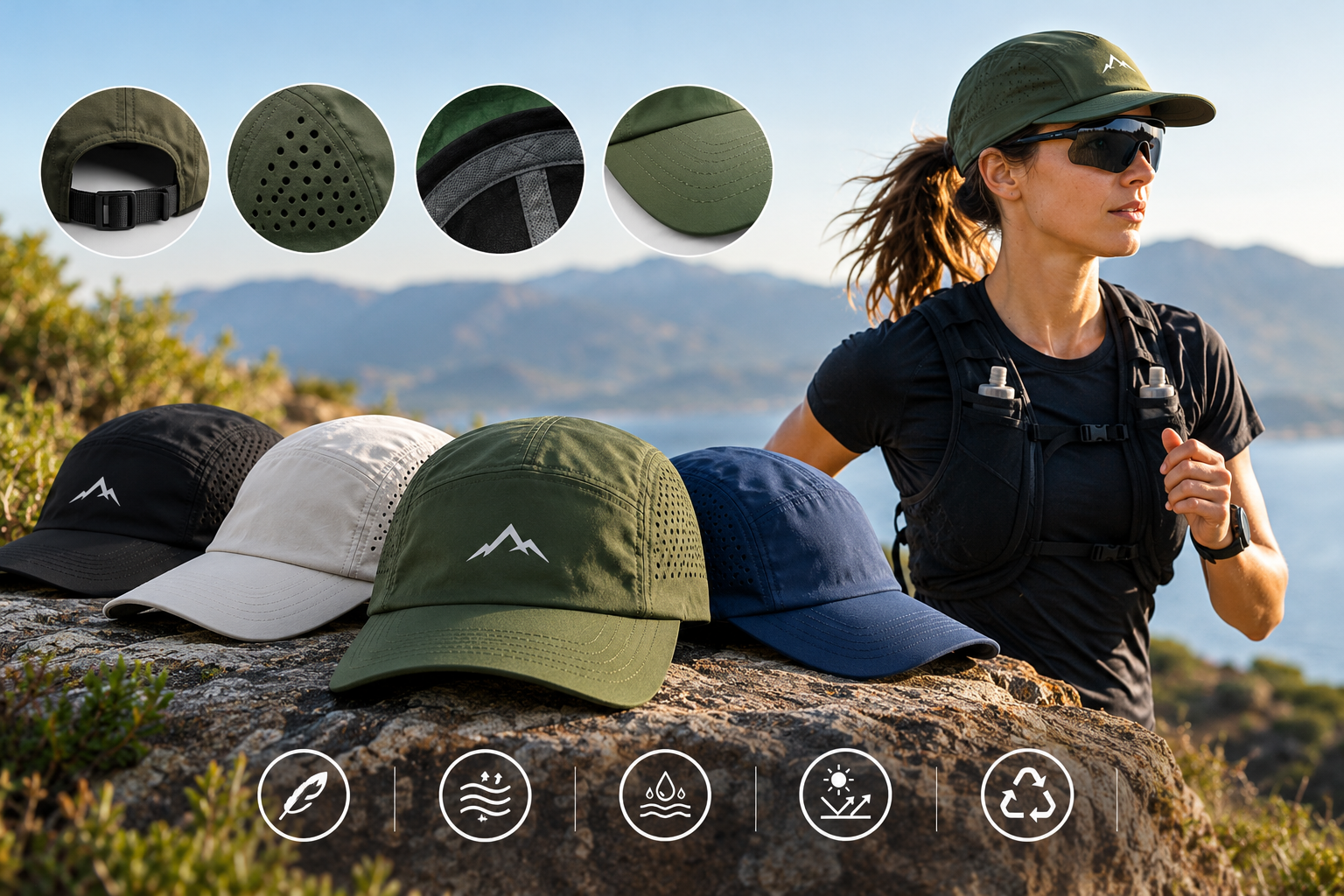
Running is more than a sport. For many people, it is a daily habit, a personal challenge, a team activity, or a way to build a healthier lifestyle. Whether someone runs along city streets, trains for a marathon, explores countryside trails, or participates in a local charity race, the right equipment can make the experience more comfortable. Headwear is an important part of that equipment, particularly when runners need protection from sunlight, sweat management, and a secure fit.
Custom running caps combine practical performance features with personalised design. They allow running clubs, sports teams, event organisers, fitness brands, and businesses to create headwear that reflects their identity while serving a genuine purpose. With suitable materials, carefully selected colours, and high-quality customisation, a running cap can become a useful part of a runner’s kit rather than simply another promotional item.
At Custom Embroidered Caps uk, custom headwear can be approached as a balance between appearance, comfort, and brand identity. This guide explains how to choose the right running cap, which features to consider, how to personalise the design, and what to look for when ordering caps for individuals, teams, or larger groups.
What Are Custom Running Caps?
Custom running caps are lightweight caps designed for running and other active pursuits, with personalisation added to suit a particular individual, organisation, or event. Depending on the design, they may feature breathable fabrics, moisture-managing sweatbands, adjustable closures, reflective details, and a curved or lightweight brim.
Customisation makes each cap more distinctive. A running club might add its name and emblem, a race organiser might use the event logo, and a fitness business might select colours that match its wider brand identity. Individuals can also create caps featuring initials, personal graphics, or designs inspired by their favourite running routes.
Unlike ordinary fashion caps, performance running caps should be selected with movement and comfort in mind. A cap that looks excellent but feels heavy, traps heat, or shifts during a run may not be the right choice for regular training.
The ideal design combines three essential elements:
- Performance: Lightweight construction and suitable ventilation for active use.
- Comfort: A fit that remains secure without creating unnecessary pressure.
- Personalisation: Colours, logos, and details that make the cap recognisable.
The right combination depends on where the cap will be worn, how frequently it will be used, and the preferences of the people wearing it.
Why Are Custom Running Caps Popular?
Personalised running headwear appeals to a wide range of customers because it connects everyday performance with team identity and practical branding.
1. A Consistent Look for Running Clubs
Running clubs often want their members to feel part of a shared community. Matching caps can help create a consistent appearance during training sessions, organised races, club photographs, and group outings.
A well-designed club cap can feature a simple embroidered emblem, the club name, or a distinctive colour combination. The design does not need to be complicated. A recognisable logo and a comfortable cap can be enough to create a professional team appearance.
2. Useful Merchandise for Running Events
Marathons, charity runs, fun runs, and local fitness events offer opportunities to create merchandise that participants can continue using after the event.
Custom running caps can be produced for participant packs, volunteers, event staff, sponsors, and fundraising campaigns. Organisers may choose a design that includes the event name, year, or a memorable graphic.
Unlike some event giveaways that have limited practical use, a comfortable running cap can remain part of a person’s training equipment long after the finish line.
3. Brand Visibility for Fitness Businesses
Gyms, personal trainers, sports retailers, running coaches, and fitness brands can use personalised caps to strengthen their visual identity.
A cap may be worn at training sessions, outdoor events, or everyday activities. This creates opportunities for brand exposure, provided the cap is comfortable enough for people to wear regularly.
For businesses, the most effective approach is usually to prioritise product quality and thoughtful design rather than placing oversized branding across the entire cap.
4. Personal Style and Motivation
Some runners prefer understated accessories, while others enjoy bright colours and expressive graphics. Customisation makes it possible to create headwear that reflects individual preferences.
A runner might choose a favourite colour, add initials, or incorporate a graphic associated with a personal goal. Running caps can also be designed for birthdays, running challenges, fundraising achievements, and group training trips.
Choosing the Best Material for Custom Running Caps
Material selection is one of the most important decisions when designing performance headwear. The fabric affects weight, breathability, drying behaviour, durability, and how the finished cap feels against the skin.
There is no single material that is best for every runner. The right choice depends on climate, running intensity, intended use, and the balance between comfort and durability.
Lightweight Polyester
Polyester is widely used in sportswear because it can be made into lightweight fabrics suitable for active use. Many performance polyester materials are designed to move moisture away from the skin, although the result depends on the fabric construction and finishing.
For running caps, lightweight polyester can offer several advantages:
- A relatively light feel during exercise.
- Good potential for quick drying.
- Suitability for printed colours and graphics, depending on the fabric.
- Practical use for regular training and organised sporting events.
When comparing options, check the actual fabric specification rather than assuming every polyester cap has identical moisture-management properties.
Mesh Panels
Mesh panels can support airflow through parts of a cap. They may be useful for runners who train in warm conditions or prefer a more ventilated design.
Mesh construction varies considerably. Some caps use mesh across large sections, while others include smaller ventilation areas. The best arrangement depends on the cap’s overall structure and intended use.
For a team order, it is worth checking whether the mesh feels comfortable against the head and whether the material maintains its shape during repeated use.
Nylon and Technical Performance Fabrics
Some running caps use nylon or blended technical fabrics. These materials can be selected for lightweight construction, flexibility, durability, or particular weather-related requirements.
A nylon cap may suit trail runners and outdoor enthusiasts, but the exact performance depends on its weave, coating, lining, and overall design. Water resistance should not be assumed simply because a cap is made from nylon.
If the cap is intended for demanding outdoor conditions, review the manufacturer’s technical specifications and care instructions before making a decision.
Cotton and Cotton Blends
Cotton can feel familiar and comfortable for casual wear, but it is not always the first choice for high-intensity running. It may absorb sweat and take longer to dry than some lightweight technical fabrics.
Cotton-blend caps may work well for relaxed activities, lifestyle merchandise, or post-run wear. For sustained training in warm weather, a purpose-designed performance fabric may be more suitable.
How to Compare Cap Materials
When comparing fabrics, consider these questions:
- Is the cap intended for short runs, long-distance training, or everyday wear?
- Will it be used in hot, cool, wet, or changeable conditions?
- Does the material feel lightweight and comfortable?
- How does the fabric manage moisture?
- Is the cap easy to wash and maintain?
- Will the chosen customisation method work well with the material?
Answering these questions helps you select a cap based on real use rather than appearance alone.
Essential Features to Look for in Performance Running Headwear
A good running cap should support the runner without becoming a distraction. Although different designs offer different features, several details deserve attention before placing an order.
Breathability and Ventilation
Running generates heat, so ventilation can contribute to comfort. Breathable fabric and mesh panels may help airflow, particularly during outdoor training.
However, ventilation is only one part of the overall design. A cap can include mesh and still feel uncomfortable if it is too heavy, poorly fitted, or made with a restrictive sweatband.
Consider the expected weather and activity level when selecting a design for your group.
Moisture-Managing Sweatbands
The sweatband sits against the forehead and can influence how comfortable the cap feels during exercise. A suitable sweatband may help manage perspiration and reduce the sensation of moisture running into the eyes.
Look for a sweatband that feels soft, fits securely, and is easy to clean. Since runners may wear their caps repeatedly throughout the week, maintenance matters as much as the initial appearance.
Lightweight Construction
A heavy cap can become noticeable during a long run. Lightweight materials and a simple structure can help reduce that feeling.
Before choosing a cap for a large order, review its weight or request a sample if available. Try it during the activity for which it is intended rather than judging it only while standing indoors.
Secure, Adjustable Fit
Head sizes and fit preferences differ. An adjustable closure can make a cap more flexible for clubs and events where many people will receive the same design.
Common closure styles include hook-and-loop fastenings, buckles, and elasticated constructions. Each offers a different balance of adjustability, appearance, and comfort.
For running, the cap should feel secure without being excessively tight. It should not shift significantly when the wearer moves their head or increases their pace.
A Practical Brim
The brim can help shield the eyes from direct sunlight and may provide some protection from light rain. Curved brims are popular because they create a familiar sporting look and can be comfortable for many runners.
Brim length and flexibility matter. A brim that is too stiff or poorly proportioned may be distracting, while a suitable design can help maintain a clear forward view.
Reflective Details
Reflective elements can improve visibility when illuminated by vehicle headlights or other light sources. They may be useful for runners who train near roads or during low-light conditions.
Reflective details are not a substitute for suitable lighting, high-visibility clothing, safe route choices, or awareness of traffic. If visibility is a priority, consider how the cap works alongside the runner’s wider equipment.
Shape Retention and Durability
A running cap may be washed frequently, packed into a sports bag, and exposed to sweat and sunlight. Fabric quality, stitching, brim construction, and closure design all influence how it holds up over time.
Check the care instructions and avoid assuming that every cap is suitable for machine washing. A well-chosen product should match the practical demands of its intended users.
How to Design Custom Running Caps for Your Brand
The strongest custom cap designs begin with a clear purpose. Before choosing colours or uploading artwork, decide who will wear the caps and what the design needs to communicate.
Step 1: Define the Intended Use
Start by identifying the main purpose of the order.
For example:
- A running club may need durable caps for weekly training.
- A marathon organiser may want merchandise for participants.
- A business may require branded caps for a sponsored fitness event.
- A coach may want matching headwear for a training group.
- An individual runner may prefer a personal design for everyday use.
The intended use helps determine which fabric, fit, colour, and decoration method will be appropriate.
Step 2: Choose Your Cap Style
Running caps are available in different silhouettes and constructions. Some have a traditional baseball-cap appearance, while others use a more compact, technical shape.
Consider the brim, crown depth, ventilation, fabric weight, and closure. A low-profile design may appeal to runners who prefer a close-fitting shape, whereas a more structured cap may be better suited to those who want a defined silhouette.
If performance is the priority, choose a design specifically intended for active use rather than selecting a standard promotional cap based only on its price.
Step 3: Select a Colour Scheme
Colour is an important part of brand recognition. Your cap can use the primary colours of your organisation, complement a running club’s kit, or create a distinctive look for a one-off event.
Popular design approaches include:
- Black caps with contrasting embroidery.
- White or light-coloured caps with a bold emblem.
- Bright colours for event staff and group identification.
- Two-tone designs that match team uniforms.
- Minimalist colours for everyday running and lifestyle wear.
When choosing a colour, consider practical use as well as appearance. Lighter and darker fabrics may show sweat marks, dirt, or fading differently. If the caps will be used regularly, ask about colourfastness and suitable care.
Step 4: Prepare Your Logo or Artwork
A clear logo helps make the finished cap recognisable. Before submitting artwork, check that the design is suitable for the available decoration area.
Fine lines, very small lettering, and intricate illustrations may not reproduce well at a small size. Simplifying a design can sometimes produce a better result than trying to fit every detail onto the cap.
Vector artwork is often helpful for scaling logos, while high-resolution raster files may also be suitable depending on the production process. If you only have a basic image, ask the supplier whether it can be prepared for production.
Always ensure that you have permission to use any logo, illustration, or other artwork supplied for customisation.
Step 5: Position the Logo Carefully
Logo placement affects the appearance of the cap and how easily the design can be seen.
The front panel is a common choice because it provides a prominent position for a club emblem or company name. Side panels can work for a small symbol or secondary detail, while rear placement may suit a short phrase or additional branding.
The available space varies by cap construction. A logo that looks balanced on a computer screen may appear too large or too small on the finished product.
Ask for a digital mock-up showing the logo on the selected cap style. Review the size, alignment, colours, and spacing before approving production.
Step 6: Keep the Design Easy to Read
A running cap usually has a limited decoration area. Simple designs often work better because the logo remains recognisable at a glance.
For effective results:
- Use lettering that is large enough to read.
- Avoid unnecessary decorative elements.
- Maintain clear contrast between the design and the fabric.
- Keep the logo proportionate to the cap panel.
- Check that fine details will remain visible after production.
For example, a running club could use a compact emblem with its initials rather than placing the full club name, slogan, founding year, and several graphics into one small area.
Step 7: Review a Mock-Up Before Production
A mock-up allows you to check how the artwork will appear on the cap. It is an important stage for both individual orders and bulk production.
Review the spelling, colour choices, logo position, design size, and overall balance. If your order includes multiple colours or cap styles, make sure the approved artwork matches each version.
For larger orders, ask about samples, production lead times, minimum quantities, and the process for approving any changes. Confirming these details early can help reduce avoidable delays.
Embroidery, Printing, or Other Customisation Methods?
The best decoration method depends on the cap fabric, artwork, intended use, and desired appearance. Not every technique is suitable for every performance cap.
Embroidery
Embroidery creates a design using stitched thread. It is a popular choice for logos, initials, and simple graphics that need a textured, professional finish.
Potential benefits include:
- A raised, tactile appearance.
- A classic sporting and teamwear style.
- Suitability for many logos and lettering designs.
- A distinctive finish that can complement a club or business identity.
However, embroidery adds thread and backing to the fabric. Very detailed designs can become difficult to reproduce at a small size, and heavy stitching may not be ideal for every ultra-lightweight cap.
At Custom Embroidered Caps uk, embroidery is a natural option to explore when your priority is a stitched brand identity. For performance headwear, make sure the selected cap construction can support the embroidery comfortably.
Printed Designs
Printing can be suitable for artwork that includes gradients, complex colour combinations, or details that are difficult to represent with thread. The available print method will depend on the fabric and the manufacturer’s production process.
Printed designs may be useful for event graphics, multicoloured artwork, and particular lightweight cap constructions. Ask about durability, washing instructions, and the expected appearance after repeated use.
Heat-Applied Decorations
Some cap designs can accommodate heat-applied graphics or transfers. These can be useful for certain logos and lettering, but compatibility depends on the fabric, surface, temperature requirements, and construction.
Not all technical fabrics tolerate the same application process. Confirm that the decoration method is suitable for the chosen cap before approving an order.
Which Method Should You Choose?
Choose embroidery when you want a traditional stitched appearance and the artwork is suitable for thread. Consider printing when the design requires complex colours or fine visual detail. Explore heat-applied decoration only when the material and construction support it.
The decision should be made around the finished product rather than the technique alone. A visually attractive design is most successful when it also suits the cap’s intended use.
Custom Running Caps for Clubs, Teams, and Events
Different customer groups have different requirements. Understanding those needs makes it easier to design headwear that will be worn and appreciated.
Running Clubs
Running clubs can use custom caps to create a consistent look for members. A club emblem, distinctive colour, and comfortable fit can turn the cap into a recognisable part of the club kit.
For regular use, prioritise durability, fit, and ease of care. If members have different preferences, an adjustable style may be a practical starting point.
Marathons and Charity Runs
Event organisers may order caps for runners, volunteers, sponsors, or staff. The design can include the event name, date, charity identity, or a graphic associated with the route.
For these orders, confirm quantities, delivery deadlines, and artwork approval dates well in advance. If the caps will be distributed to a large group, consistency between units is particularly important.
Schools, Colleges, and University Running Groups
Educational institutions may want caps for athletics clubs, student running societies, fundraising events, and sports competitions.
A simple emblem and a school or university colour scheme can create a cohesive design. Before using an institutional crest, make sure the artwork is approved for merchandise production.
Corporate Fitness Programmes
Businesses increasingly organise team challenges, sponsored runs, and employee wellbeing activities. Custom caps can provide practical merchandise for participants and help the group look coordinated during events.
The design should balance company branding with wearability. A comfortable cap with restrained branding may be more likely to become part of someone’s regular running kit.
Personal Trainers and Fitness Brands
Coaches and fitness businesses can use branded running caps as merchandise, client gifts, or part of a wider training kit.
If caps are being sold to customers, think about colour options, sizing flexibility, fabric specifications, and the overall quality of the product. Merchandise should reflect the standards of the business it represents.
How to Order Custom Running Caps in Bulk
Bulk orders require more planning than buying a single cap. A clear process helps ensure that the final products meet expectations.
Establish Your Quantity and Budget
Start with an estimated number of caps. A club may need enough for current members, while an event organiser may require extras for volunteers or late registrations.
Ask suppliers whether pricing varies by quantity, cap style, decoration method, number of colours, or artwork complexity. Request a complete quotation that explains what is included, including delivery and any applicable setup costs.
Avoid comparing prices without checking that the products and decoration specifications are equivalent.
Confirm the Product Specification
Before approving a quote, document the selected cap style, fabric, colour, closure, decoration method, logo dimensions, and quantity.
If the order includes different designs or colours, list each version separately. This reduces the chance of confusion during production.
Approve the Artwork
Check every mock-up carefully. Make sure that the logo is correctly positioned and scaled, the colours are suitable, and all wording is accurate.
The approved mock-up should serve as the reference for production. If changes are required, request a revised version rather than relying on an informal description.
Confirm Production and Delivery Times
Ask for the estimated production schedule and delivery date. Event-related orders should allow enough time for manufacturing, dispatch, transit, and any unexpected delays.
If the caps are needed for a race or launch, communicate the fixed deadline before placing the order. Do not assume that a standard lead time will apply to every cap style or order quantity.
Check the Finished Products
When the order arrives, inspect the caps for consistency, stitching quality, logo placement, colour accuracy, and any visible defects.
For large orders, check a representative selection and follow the supplier’s process for reporting issues. Keeping the order confirmation and approved artwork can make it easier to resolve any differences.
How Much Do Custom Running Caps Cost?
The cost of custom running caps varies according to the product and production requirements. There is no single price that applies to every order.
The main factors include:
Cap quality and construction: Lightweight technical fabrics, specialist running designs, and additional features may affect the unit price.
Order quantity: Larger orders may qualify for different unit pricing, depending on the supplier’s production process and minimum quantities.
Customisation method: Embroidery, printing, and other decoration techniques have different production requirements.
Logo complexity: Detailed artwork, multiple decoration locations, or larger designs may influence the quotation.
Number of colours and styles: Ordering several different designs can affect production planning and pricing.
Delivery requirements: Shipping costs, destination, and requested timing may also affect the total.
To manage your budget, choose a cap specification that meets your actual needs. For example, a local running club may prefer a lightweight, adjustable cap with a small embroidered emblem rather than a more elaborate design with several decoration locations.
For a meaningful comparison, request a quotation based on the exact cap style, quantity, artwork, and delivery destination.
Care Tips for Keeping Running Caps in Good Condition
Running caps are exposed to sweat, dust, sunlight, and frequent handling. Good care can help maintain their appearance and extend their useful life.
Follow the Care Label
Always check the manufacturer’s instructions before washing. Some caps can be gently machine-washed, while others require hand cleaning or specific care.
Avoid assuming that every cap can be placed in a washing machine or tumble dryer.
Clean Sweat and Dirt Promptly
Perspiration and dirt can build up around the sweatband and brim. Cleaning the cap according to its care instructions after heavy use can help prevent persistent odours and marks.
Use suitable cleaning products and avoid aggressive scrubbing that may damage the fabric, stitching, or decoration.
Allow the Cap to Dry Properly
Air-drying is often a practical choice when permitted by the care label. Keep the cap away from excessive heat, which may affect some fabrics, adhesives, and structural components.
Shape the cap gently while it dries if the manufacturer’s instructions allow it.
Store It Carefully
Avoid crushing the cap beneath heavy equipment in a sports bag. Storing it in a way that protects the brim and crown can help preserve its shape between runs.
For embroidered designs, avoid pulling at loose threads. If damage occurs, follow the supplier’s care advice rather than cutting threads that may be part of the design.
Common Mistakes to Avoid When Designing Running Caps
Even a strong logo can produce a disappointing result if practical details are overlooked. Avoid these common mistakes when planning a custom order.
Choosing Appearance Over Comfort
A cap may look stylish but still be unsuitable for running. Always consider the fabric, weight, ventilation, sweatband, and fit.
Using an Overly Detailed Logo
Tiny text and intricate graphics may not reproduce clearly on a small panel. Simplify the artwork when necessary and request a production-ready mock-up.
Selecting an Unsuitable Decoration Method
A method that works well on a structured cotton cap may not be appropriate for a very lightweight technical fabric. Confirm compatibility before production.
Ignoring Fit and Adjustability
If caps are intended for a group, consider the range of head sizes and fit preferences. Adjustable closures may offer greater flexibility, although the exact fit will depend on the cap’s construction.
Leaving the Order Until the Last Minute
Bulk orders need time for artwork preparation, approval, manufacturing, and delivery. Start early, particularly when the caps are tied to a specific race or event.
Failing to Check the Final Design
Spelling mistakes, incorrect colours, and poor logo alignment can be avoided by reviewing the mock-up carefully. Treat artwork approval as an essential production step rather than a formality.
Are Custom Running Caps a Good Promotional Product?
Custom running caps can be a practical promotional product when they are designed for the people receiving them. Their value comes from a combination of usability, comfort, and a recognisable design.
For a business sponsoring a charity race, a cap may help connect the brand with the event. For a running club, it can strengthen group identity. For a fitness business, it can serve as merchandise that customers use beyond the gym.
However, promotional value depends on quality. If a cap is uncomfortable or unsuitable for its intended activity, people may rarely wear it. Investing in appropriate materials and a thoughtful design is therefore more useful than focusing solely on the number of logos or decorative details.
The most effective promotional caps are those that people genuinely want to keep using.
Custom Running Caps vs Standard Baseball Caps
Standard baseball caps are commonly designed for casual wear, while performance running caps are selected with exercise in mind. The two styles can look similar, but their materials and construction may differ.
| Feature | Performance Running Caps | Standard Baseball Caps |
|---|---|---|
| Primary purpose | Running and active use | Casual wear and general branding |
| Typical material choices | Lightweight technical fabrics | Cotton, polyester, blends, and other fabrics |
| Ventilation | May include performance-oriented ventilation | Depends on the design |
| Sweat management | May feature moisture-managing components | Depends on the sweatband and fabric |
| Construction | Often designed to reduce weight | Can range from lightweight to heavily structured |
| Customisation | Depends on fabric and construction | Often supports several decoration options |
| Best selection criteria | Comfort, fit, airflow, and activity suitability | Appearance, everyday comfort, and branding needs |
Neither style is automatically better in every situation. If your audience intends to run regularly, a performance-focused design is usually worth considering. If the cap is mainly for casual merchandise, a standard baseball cap may be sufficient.
Frequently Asked Questions About Custom Running Caps
What are custom running caps used for?
Custom running caps are used by running clubs, sports teams, marathon organisers, charities, fitness businesses, and individual runners. They combine headwear for active use with personalised logos, colours, names, or graphics.
Which material is best for custom running caps?
Lightweight technical polyester is a common option for performance headwear because it can be designed for moisture management and quick drying. Nylon and technical blends may also be suitable. The best choice depends on the fabric specification, weather, activity level, and personal preference.
Can I add an embroidered logo to a running cap?
Yes, embroidery can be suitable for many running caps, provided the fabric and construction support it. Small logos and simple graphics are often easier to reproduce than highly detailed artwork. For very lightweight performance fabrics, confirm that embroidery will not make the finished cap uncomfortable.
Are custom running caps suitable for marathon events?
Yes. Organisers can use them for participant merchandise, volunteer uniforms, staff identification, sponsorship campaigns, or fundraising products. Plan the order early and confirm the production schedule against the event date.
Can I order custom running caps for a whole team?
Team orders are a common use for personalised caps. Before ordering, confirm the quantity, cap style, colours, logo placement, decoration method, and delivery requirements. Adjustable styles may be useful when supplying a group with different fit preferences.
Are custom running caps available in different colours?
Colour options depend on the cap style and supplier. You may be able to choose colours that match a running club, business, event, or sports uniform. Always confirm the available options before approving the design.
How should I wash a custom running cap?
Follow the manufacturer’s care label. Depending on the construction, the cap may require gentle hand washing or another specific cleaning method. Avoid excessive heat and harsh cleaning that could damage the fabric, stitching, or decoration.
Are custom running caps good for business promotion?
They can be effective when the design is comfortable, practical, and relevant to the audience. Fitness businesses, sponsors, sports retailers, and event organisers can use them as merchandise or branded equipment. Product quality helps determine whether recipients will continue wearing the cap.
What artwork should I provide for a custom cap?
A clear logo file is the best starting point. Vector artwork is often helpful, but suitable high-resolution image files may also work. The required format depends on the production method. Ask your supplier whether artwork preparation or digitisation is available if you do not have a production-ready file.
How early should I order custom running caps for an event?
Order as early as practical. The timeline depends on stock availability, order quantity, artwork complexity, production workload, and shipping destination. Confirm a realistic delivery estimate with the supplier before committing to an event deadline.
Create Custom Running Caps That Perform and Represent Your Brand
Custom running caps offer a practical way to combine performance headwear with a distinctive design. For running clubs, fitness businesses, event organisers, and individual runners, the right cap can provide a comfortable fit, useful features, and a recognisable identity.
The key is to choose a product that suits its intended use. Consider the fabric, ventilation, sweatband, closure, brim, and care requirements before deciding how the cap should look. Then select colours and decoration that represent your brand without compromising comfort or readability.
A simple, well-planned design can often achieve more than an overcrowded one. By choosing suitable materials, preparing clear artwork, and reviewing a mock-up before production, you can create running headwear that looks professional and remains useful after the event or training session is over.