
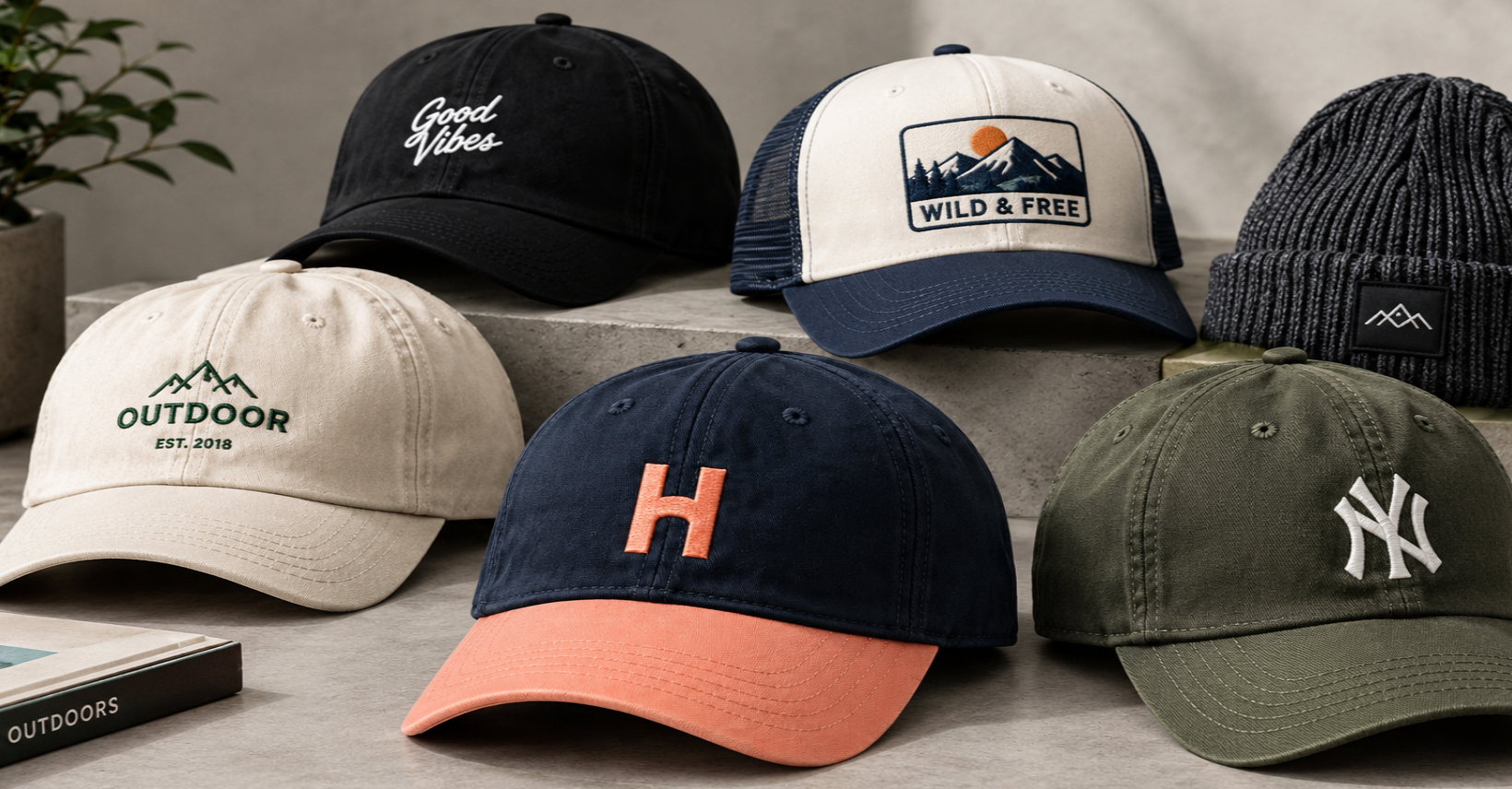
A custom embroidered cap can do much more than display a company logo. When designed thoughtfully, it becomes an everyday accessory that customers enjoy wearing, a recognisable part of a clothing collection, and a practical way to build brand awareness.
However, not every branded cap achieves this. Some designs look impressive in a mockup but feel uncomfortable when worn. Others feature oversized logos, unsuitable colours, poor proportions, or unnecessary details that make them difficult to style with everyday outfits.
The difference between a cap customers wear regularly and one they leave in a drawer often comes down to the decisions made during the design process.
At Custom Embroidered Caps UK, we believe successful custom headwear should combine attractive design, comfortable construction, suitable materials, and professional embroidery. Whether you are launching a clothing brand, creating merchandise for an event, supplying branded headwear to employees, or developing products for retail, understanding these elements can help you create caps that people genuinely want to wear.
In this guide, we explain how to design custom embroidered caps that reflect your brand identity while appealing to your target audience.
1. Understand Your Target Audience Before Designing
Before selecting a cap colour or deciding how large your logo should be, consider who will wear the finished product.
A cap designed for a streetwear brand may require a completely different appearance from one created for a golf club, corporate team, outdoor business, or sports organisation. The best designs begin with a clear understanding of the people they are intended for.
For example, customers shopping for streetwear may appreciate structured snapbacks, bold typography, distinctive colour combinations, and raised embroidery. A lifestyle brand targeting customers who prefer understated fashion might achieve better results with a relaxed dad cap, neutral colours, and a small embroidered symbol.
Corporate customers may prioritise a professional appearance, comfortable fit, and branding that represents their organisation without looking overly promotional.
Consider these questions before developing your design:
- Who is most likely to wear the cap?
- Will customers wear it every day, during sports, at work, or for special occasions?
- Does your audience prefer minimalist designs or bold graphics?
- What clothing styles and colours are common among your customers?
- Is the cap intended for retail sales, team uniforms, promotional merchandise, or an event?
Answering these questions helps you establish a clear design direction instead of choosing features simply because they look attractive individually.
At Custom Embroidered Caps UK, we help customers explore different cap styles and customisation options to suit their intended use, branding, and audience.
2. Choose a Cap Style That Matches Your Brand
The shape of a cap influences its entire appearance. Even when two caps feature the same logo, their different profiles, panel structures, and closures can create noticeably different results.
Choosing the right construction is therefore one of the most important decisions when designing custom embroidered caps.
Baseball Caps
Baseball caps offer a familiar, versatile shape suitable for businesses, sports teams, clothing brands, and everyday merchandise.
Their curved peaks and traditional construction work well with company logos, small embroidered symbols, lettering, and medium-sized front designs.
They are particularly useful when you want to create branded headwear that customers can wear with casual clothing without making the branding feel too prominent.
Dad Caps
Dad caps typically feature a relaxed construction, a softer crown, and a curved peak. They are an excellent option for brands that prefer a casual, understated aesthetic.
Small front embroidery, tonal logos, simple lettering, and subtle side details can work particularly well with this style.
Because the crown is generally softer, the design should complement the cap’s natural shape rather than relying on a large, rigid graphic.
Snapback Caps
Snapbacks usually have a structured crown, a relatively flat or slightly curved peak, and an adjustable snap closure.
Their more defined silhouette makes them suitable for streetwear collections, sports-inspired merchandise, music brands, and statement designs.
Bold front logos, raised 3D embroidery, contrasting thread colours, and additional side branding can help create a distinctive appearance.
Trucker Caps
Trucker caps typically combine a structured front panel with breathable mesh at the back.
They work well for outdoor brands, automotive businesses, casual clothing labels, events, and lifestyle merchandise.
Because the front panel is often a prominent feature, it can accommodate a suitable embroidered logo or patch while the mesh creates a contrasting visual effect.
Five-Panel and Six-Panel Caps
Five-panel caps often provide a distinctive front panel that suits contemporary streetwear and minimalist branding. Their construction can be particularly useful when the design benefits from a broad, relatively uninterrupted front area.
Six-panel caps use six fabric panels to form the crown and are common in traditional baseball caps and many structured styles.
The best choice depends on the desired silhouette, logo dimensions, material, and intended fit.
Before confirming your design, consider how the embroidery will sit on the chosen construction. A logo that works well on one cap style may require adjustments to look equally balanced on another.
3. Create a Logo That Works With Embroidery
A logo that looks excellent on a computer screen does not always translate perfectly into embroidery.
Unlike printing, embroidery recreates artwork with physical stitches. Fine lines, tiny lettering, narrow gaps, and complicated shapes can become difficult to reproduce cleanly when the design is reduced to a small area.
This is why designing for embroidery requires a different approach from designing for websites, packaging, or digital advertising.
Keep Small Logos Readable
If your logo contains a company name, slogan, and decorative symbol, consider whether every element needs to appear on the front of the cap.
For smaller embroidery areas, a simplified symbol or brand initials may create a cleaner result than a complete logo containing several lines of text.
You do not necessarily need to change your brand identity. Instead, develop an embroidery-friendly version that preserves the most recognisable elements.
Avoid Excessively Fine Details
Very thin lines and tiny spaces between letters can be difficult to reproduce consistently. Dense stitching may also cause small details to merge visually.
A professional embroidery preparation process, often called digitising, converts suitable artwork into stitch instructions for embroidery machinery.
The digitising process considers stitch direction, density, underlay, and other technical factors that influence the final result.
Before production, review whether your artwork needs adjustments to suit the available embroidery area and the fabric of your selected cap.
Choose the Right Logo Size
A large front logo can create a strong visual statement, but bigger is not always better.
Small, centred logos can feel refined and premium, while larger designs may suit streetwear and sports-inspired collections. The correct size depends on the cap profile, logo shape, and overall design.
Ask for the proposed logo dimensions and placement to be confirmed before production. This helps you assess how the design will look on the actual cap rather than relying solely on the appearance of the original artwork.
4. Select the Right Embroidery Technique
Embroidery is one of the most effective ways to create distinctive branded headwear because it adds texture and gives a logo a more integrated appearance.
However, different embroidery techniques produce different visual effects. Choosing the right method helps you achieve the intended style without making the design unnecessarily complicated.
Flat Embroidery
Flat embroidery uses stitches that sit relatively close to the fabric surface.
It is suitable for many logos, lettering, small symbols, and designs that require a clean, traditional finish.
This technique can work particularly well for corporate caps, minimalist fashion collections, everyday baseball caps, and subtle branding.
3D Puff Embroidery
Three-dimensional puff embroidery uses foam beneath selected stitched areas to create a raised effect.
It is commonly used for bold lettering, monograms, and relatively simple shapes that benefit from additional depth.
Raised embroidery can be especially effective on structured snapbacks and streetwear caps.
However, not every logo is suitable for this technique. Very small lettering, intricate details, and narrow shapes may not produce the desired result. A suitable design assessment can help determine whether 3D puff embroidery is appropriate.
Embroidered Patches
Embroidered patches provide another way to introduce detailed branding to custom caps.
A patch can be particularly useful when your artwork includes a badge, emblem, or defined border. Depending on the design, it can also provide a different texture from direct embroidery.
Woven, PVC, and other patch styles may be suitable alternatives when the artwork requires details that are difficult to reproduce with traditional embroidery.
At Custom Embroidered Caps UK, we offer different branding options depending on the artwork, cap construction, and desired appearance. The aim is to choose a technique that supports the design rather than forcing every logo into the same method.
5. Choose Colours That Customers Can Wear Easily
Colour is one of the first things customers notice about a cap. It influences how the product looks, how easily it coordinates with clothing, and how clearly the branding stands out.
A successful colour combination should represent your brand while remaining attractive as a wearable accessory.
Start With Your Brand Colours
Your brand colours can provide a useful starting point. However, using every brand colour on one cap is not always necessary.
Choose one main cap colour and introduce your remaining colours through the embroidery, peak, stitching, mesh, or other details.
For example, a navy cap with white embroidery creates a clean, high-contrast appearance. A black cap with dark grey embroidery produces a more understated effect, while a cream cap with forest-green branding can create a classic lifestyle aesthetic.
Consider Neutral Colours
Black, navy, grey, cream, beige, and white are versatile choices for many types of headwear.
These colours often coordinate easily with casual clothing, making them useful for retail collections and everyday branded merchandise.
Brighter colours can also work well, especially when they are part of a recognisable brand identity or a specific seasonal collection.
Match the Thread to the Fabric
The embroidery thread should complement the cap material rather than compete with it.
High contrast can improve readability, particularly when the logo contains lettering. Tonal embroidery, meanwhile, can create a subtle and sophisticated appearance.
Think about how the logo will look from a normal viewing distance. A colour combination that appears attractive when enlarged on a screen may become less readable on a finished cap.
Whenever possible, review thread colours alongside the selected cap fabric before approving the final specification.
6. Choose Comfortable and Appropriate Materials
A cap can look excellent and still disappoint customers if it feels uncomfortable or does not suit its intended use.
Material selection affects texture, weight, breathability, structure, and the overall appearance of the finished product.
Cotton Twill
Cotton twill is a popular choice for everyday caps because of its familiar fabric texture and classic appearance.
It can suit baseball caps, dad caps, and many lifestyle collections.
Depending on its weight and construction, cotton twill can support both relaxed and structured designs.
Polyester
Polyester is commonly used for sports, promotional, and performance-oriented headwear.
Its suitability depends on the particular fabric construction and intended application. It can be a useful choice when developing lightweight caps for active use.
Nylon
Nylon fabrics can create a lightweight, contemporary look and are often considered for outdoor-inspired or technical designs.
They may suit brands that prefer a modern aesthetic, although the fabric and construction should be selected according to the intended use.
Wool and Blended Fabrics
Wool and suitable blended fabrics can provide a richer texture and a more traditional appearance.
They may be appropriate for premium, heritage-inspired, or colder-weather collections.
When choosing fabric, consider more than its appearance. Think about the season, intended use, desired structure, and the way embroidery will sit on the material.
The right combination helps create a cap that looks good while remaining practical for its intended audience.
7. Get the Crown Structure and Fit Right
The crown is the part of the cap that covers the head. Its shape and structure influence the overall silhouette, the available embroidery area, and how the cap feels when worn.
Structured caps generally use reinforcement to help the front maintain a more defined shape. They are often suitable for bold logos and raised embroidery.
Unstructured caps have a softer construction that follows the shape of the head more naturally. They are frequently chosen for relaxed, casual styles.
Neither option is automatically better. The right choice depends on your design and target audience.
You should also consider the cap’s profile, which describes how high or low the crown sits on the head.
A high-profile crown may suit bold streetwear designs, while a lower-profile shape can work well for minimalist or relaxed collections.
Closures also influence fit and appearance. Depending on the chosen cap style, options may include snapback closures, adjustable fabric straps, metal buckles, or fitted constructions.
For group orders and merchandise, adjustable closures can be useful because they accommodate a range of head sizes.
Before approving a design, consider the crown shape, profile, peak, and closure as parts of one complete product.
8. Use Additional Branding Without Overcomplicating the Design
A cap offers several potential branding areas beyond the front panel.
Side embroidery, back text, custom labels, coloured stitching, and branded inner tape can help create a more distinctive product. However, adding every available feature can make the design feel crowded.
The key is to establish a clear visual hierarchy.
Start with the main logo. Decide what customers should notice first, then consider whether additional details contribute something meaningful.
For example, a clothing brand might place its main symbol on the front, a small wordmark on one side, and a subtle text detail at the back.
A corporate cap may need only a front logo and a small secondary detail. An event cap might benefit from a date or slogan that gives the product lasting significance.
Additional branding should support the cap’s purpose and identity.
It is also important to check which areas can be decorated on your chosen construction. Panel seams, mesh sections, reinforcement, and closure placement can influence the available space.
At Custom Embroidered Caps UK, customisation options can include front, side, and back branding, as well as selected patches and finishing details, depending on the cap specification.
9. Design for Everyday Wear, Not Just Promotional Use
One of the most effective ways to make custom caps more appealing is to think beyond the moment they are purchased.
If customers only associate a cap with a particular event or sales promotion, they may not wear it regularly. A design that fits naturally into everyday clothing has a better chance of becoming a favourite accessory.
Consider the following principles:
Keep the design versatile. A cap that works with T-shirts, hoodies, jackets, and casual outfits can appeal to customers across different situations.
Avoid unnecessary branding. Customers may prefer a well-designed symbol or carefully positioned logo to a product covered in multiple promotional messages.
Prioritise visual balance. The logo, cap colour, peak, stitching, and other details should work together rather than competing for attention.
Consider the product as a whole. A good logo cannot compensate for an unsuitable shape or uncomfortable fit.
Create a recognisable identity. Consistent colours, logo placement, and design choices help customers connect the product with your brand.
For fashion labels, it can also be helpful to create a coordinated collection rather than relying on one design. Different colours or cap styles can offer customers variety while maintaining a consistent brand identity.
10. Prepare Your Artwork and Specifications Before Production
Clear specifications help reduce misunderstandings and make it easier to produce the intended design.
Even when you already have a finished logo, there are several decisions to confirm before manufacturing begins.
Your design brief should include:
- The preferred cap style and construction.
- Cap fabric and colour.
- Logo artwork and embroidery technique.
- Embroidery dimensions and placement.
- Thread colours.
- Closure type.
- Additional branding requirements.
- Required quantity and delivery deadline.
Reference images can be useful when explaining the shape, colour combination, or positioning you want to achieve.
If your logo contains several colours, make sure the intended thread colours are clearly identified. If the logo needs to be smaller or repositioned, communicate the required changes before approving the final design.
Artwork should also be suitable for the chosen embroidery technique. If you are unsure whether your logo will reproduce cleanly, ask your manufacturer to review it.
At Custom Embroidered Caps UK, customers can discuss their preferred cap style, artwork, colours, and branding requirements before confirming an order. Reviewing these details helps establish a clear production specification.
11. Review Your Design Before Approving Production
A design mockup helps you understand how the different elements of a cap are intended to work together.
However, a digital mockup is not the finished product. It is a visual reference that allows you to review the proposed design before manufacturing.
When checking your mockup, pay attention to the following details.
Logo Placement
Is the logo centred correctly? Does it sit at the intended height? Does its position look balanced with the cap’s seams and overall shape?
Logo Dimensions
Does the logo feel proportionate to the crown? Is the text readable at the proposed size? Would a smaller or larger design work better?
Colour Accuracy
Do the cap and thread colours complement one another? Have the intended colour combinations been communicated clearly?
Embroidery Technique
Does the design suit flat embroidery, raised embroidery, or a patch? Are there any small details that may require simplification?
Overall Appearance
Look at the cap as a complete product. Consider whether the crown, peak, closure, branding, and colours create the intended style.
Before production starts, make sure important details have been confirmed. If changes are needed, it is generally easier to resolve them during the design approval stage than after the caps have been manufactured.
Clear communication at this stage helps everyone work towards the same result.
12. Understand Minimum Orders and Pricing
The cost of custom embroidered caps depends on several factors, including the order quantity, cap construction, fabric, embroidery complexity, and additional branding requirements.
For example, a simple front logo may require less preparation than a design featuring multiple embroidery positions, several thread colours, and additional patches.
Quantity also matters. Larger orders can spread certain setup costs across more pieces, which may reduce the unit price. Smaller orders may have a higher cost per cap because some production and preparation costs remain similar regardless of quantity.
If you are launching a new clothing brand, ordering a smaller run can be a practical way to introduce a design without committing to a large quantity.
At Custom Embroidered Caps UK, our standard minimum order quantity starts from 10 pieces per design.
When requesting a quotation, provide your artwork, preferred cap style, colour choices, quantity, and branding requirements. This allows your manufacturer to assess the project and provide pricing based on the actual specification.
It is also worth discussing your intended retail price and target audience when developing a product. A design that requires numerous expensive finishing details may not suit every budget.
The goal is to find a balance between product quality, visual appeal, and the price your customers are willing to pay.
13. Common Design Mistakes to Avoid
Even a promising concept can lose its appeal if important details are overlooked.
Here are some mistakes to watch for when developing custom embroidered caps.
Using too much detail: Complex logos with tiny text and fine lines may be difficult to reproduce at a small size. Simplifying selected elements can improve clarity.
Choosing colours without considering contrast: Similar thread and fabric colours may make the logo difficult to see. Check the combination at the actual intended size.
Ignoring the cap profile: A design that suits a structured snapback may not have the same effect on a soft dad cap.
Adding too many branding elements: Multiple logos, slogans, and decorative features can compete with one another. Give the main design room to stand out.
Selecting a style without considering the audience: A bold, oversized logo may not suit a brand whose customers prefer understated accessories.
Approving a mockup without checking the specifications: Confirm the dimensions, colours, placement, and embroidery technique before production.
Focusing only on appearance: Fit, fabric, construction, and closure are equally important to the finished product.
Avoiding these mistakes can help you develop a more cohesive design and reduce the likelihood of unwanted surprises during production.
14. Why Work With Custom Embroidered Caps UK?
Developing custom headwear involves more than choosing a blank cap and adding a logo. The construction, material, embroidery, colour combination, and finishing details all influence the finished product.
At Custom Embroidered Caps UK, we help businesses, clothing brands, sports teams, clubs, and organisations develop personalised headwear around their requirements.
Our customisation options include a range of cap styles, flat and raised embroidery, selected patch styles, different colour combinations, and additional branding placements.
Whether you are developing your first merchandise design or planning a larger collection, you can discuss your artwork, preferred construction, and intended use before confirming the specification.
Our standard minimum order starts from 10 caps per design, giving smaller brands and businesses an accessible starting point for custom production.
We also aim to make the ordering process straightforward, with design details reviewed before production so the approved specifications are clear.
From minimalist embroidered dad caps to bold streetwear snapbacks, the objective is to create headwear that represents your brand and suits the people who will wear it.
Conclusion
Designing custom embroidered caps that customers actually want to wear requires a balance of creativity and practical decision-making.
The process starts with understanding your audience and choosing a cap style that suits their preferences. From there, the right logo dimensions, embroidery technique, colour combination, fabric, fit, and finishing details help bring the design together.
It is equally important to prepare clear specifications, review the proposed mockup, and consider how the cap will look and feel outside the design process.
Remember that the most effective cap is not necessarily the one with the largest logo or the greatest number of custom features. Often, a well-balanced design with comfortable construction, suitable materials, and carefully executed embroidery creates a more appealing product.
Whether you are creating branded merchandise, launching a fashion collection, or ordering headwear for your organisation, thoughtful design can help transform a simple cap into a product people enjoy wearing.
Frequently Asked Questions
1. How do I design custom embroidered caps for my brand?
Start by identifying your target audience, choosing a suitable cap style, and selecting your logo, colours, fabric, and embroidery technique. Confirm the logo size and placement, then review the proposed design specifications before production.
2. Which cap style is best for custom embroidery?
Baseball caps are versatile, dad caps suit relaxed designs, snapbacks work well for bold streetwear branding, and trucker caps offer a distinctive mesh-backed style. The best option depends on your audience, logo, and intended use.
3. Is flat embroidery or 3D puff embroidery better?
Flat embroidery is suitable for many detailed logos and lettering, while 3D puff embroidery creates a raised effect for selected bold shapes and text. Your artwork and chosen cap construction will determine which method is most suitable.
4. Can I use a detailed logo on an embroidered cap?
Yes, depending on the artwork and embroidery area. Very small lettering, fine lines, and intricate details may need adjustment to reproduce clearly. An embroidery assessment can help identify any necessary changes.
5. What colours work best for custom embroidered caps?
Navy, black, cream, beige, grey, and white are versatile options. The best combination depends on your brand identity, target audience, and desired contrast between the cap fabric and embroidery thread.
6. What is the minimum order quantity at Custom Embroidered Caps UK?
Our standard minimum order quantity starts from 10 pieces per design. Contact us with your requirements to discuss your project and obtain a suitable quotation.
7. Can I customise the front, side, and back of a cap?
Yes. Depending on the cap construction and design, you can combine front embroidery with side logos, back text, patches, and selected additional branding details.
8. How long does custom cap production take?
Our standard production and delivery timeframe is approximately 2–3 weeks, depending on the order quantity and complexity. Confirm the expected turnaround for your particular project before placing your order.